Technology has fundamentally transformed music production, making it an accessible venture for creators of all backgrounds. The proliferation of Digital Audio Workstations and affordable software has lowered financial barriers, fostering collaboration and experimentation. Innovations such as AI algorithms and virtual instruments continue to redefine the creative landscape. As music production evolves, new trends emerge, hinting at a future rich with possibilities for artists. What might the next wave of technological advancements bring to this dynamic field?
How Music Production Technology Made Creation Accessible to All
As technology continues to evolve, it has transformed music production, enabling creators from diverse backgrounds to harness their artistic potential.
Affordable software equipped with user-friendly interfaces democratizes the creative process, allowing aspiring musicians to experiment without financial barriers.
This collaborative environment fosters innovation, empowering individuals to express themselves freely while redefining the boundaries of musical genres and styles in the digital age.
Top Digital Audio Workstations in Music Production
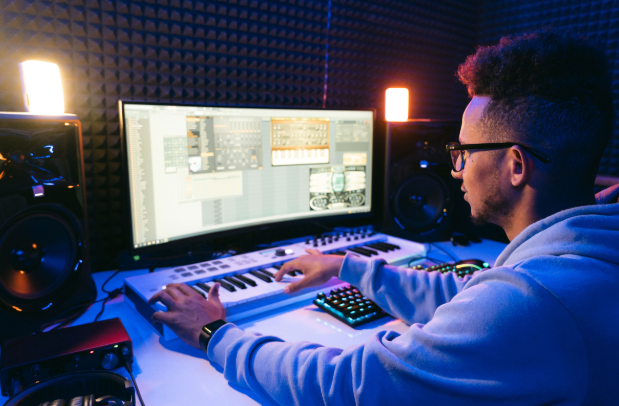
The rise of accessible music production tools has paved the way for an array of Digital Audio Workstations (DAWs) that cater to both novice and experienced creators.
Notable options include Ableton Live for live performances, Logic Pro for comprehensive production, Pro Tools for industry standards, FL Studio for intuitive beat-making, Cubase for advanced sequencing, and Reason for its unique modular approach.
Each DAW offers distinctive features that empower creativity.
Key Innovations Shaping Modern Music Production
Innovations in technology are revolutionizing music production, enabling artists to push the boundaries of creativity.
AI algorithms enhance sound design, while virtual instruments expand the palette of possibilities.
Cloud collaboration fosters seamless teamwork across distances, and mobile applications empower creators on the go.
MIDI advancements and extensive sample libraries provide infinite inspiration, allowing musicians to explore uncharted musical territories with unprecedented freedom.
See also: The Role of Technology in Modern Enterprises
Future Trends in Music Production Technology
While the landscape of music production continues to evolve, emerging trends indicate a future where technology will further enhance creativity and collaboration.
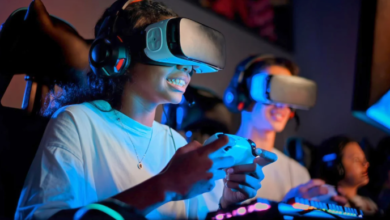
AI Composition tools will empower artists to explore limitless sonic possibilities, while Virtual Reality environments will facilitate immersive collaborative experiences.
These innovations promise to redefine the creative process, granting musicians unprecedented freedom to experiment and connect, ultimately transforming the music production landscape.
Conclusion
In an era where technology serves as a bridge for artistic expression, the landscape of music production has transformed into a vibrant tapestry woven by diverse voices. Much like a modern-day orchestra, with each musician utilizing their unique instrument, aspiring artists collaborate seamlessly across digital platforms. According to a recent survey, over 60% of musicians now use DAWs, illustrating how technology not only democratizes creation but also harmonizes global creativity, paving the way for an innovative future in music.